📍 We’ll be exhibiting at AWA NSW Conference 2026  —  Visit us at Booth 07, August 17–19.

Rural Water

Google Search Our Web Site:

In 2022 H2O Rx moved out of Sydney to a new location near Blayney in NSW. Now we are "off-grid" for our water and wastewater.

It turns out that farmers have fingers made from high tensile steel like the fencing wire they wrangle, but their insides are just like everyone else, and they and their animals do get sick from their water supplies.

  • Rainwater is very good but treatment is still needed to keep people and animals healthy - afterall, birds, mammals and leaves falling on our roof do introduce contaminants.
  • Bore water (depending on the area) can be hard - unpalatable for both humans and stock, and is less effective for irrigation. It also causes piping and infrastructure to scale and block creating maintenance and reliability issues.
  • Surface water carries sediment and and pathogens which can cause stock and human illness, requiring much the same treatment as the water in our cities.

H2O Rx are developing small scale systems for treatment of these sources. We've begun with rainwater treatment, because that was our issue when we moved! Carting drinking water from town each week is NOT fun.

Note however we don't do retail, so we can only help you with these if you are an ABN holder.

Construction

Rain Water

Prefiltration keeps larger contaminents out of the tank - this is a great way of reducing problems. It can be done a number of ways:

  • Gutter Guards - a reasonable start, but these provide coarse filtration only and require maintenance to clear leaves off the mesh, otherwise it simply rots down to fines that fall through. Then you get compost in your gutters.
  • Rainheads - fitted to downpipes, these provide finer filtration and expel leaves to the ground around the house. They are great in that they keep most larger solids out of charged downpipes. We have installed them and they are good, but the wet leaves need to be cleaned up regularly otherwise they make for great termite habitat.
  • Tank filters - fitted to the tank inlets - great, but like gutter guards, they need to be cleaned out to prevent rotting.

All the above are commercially available from your local water shop.

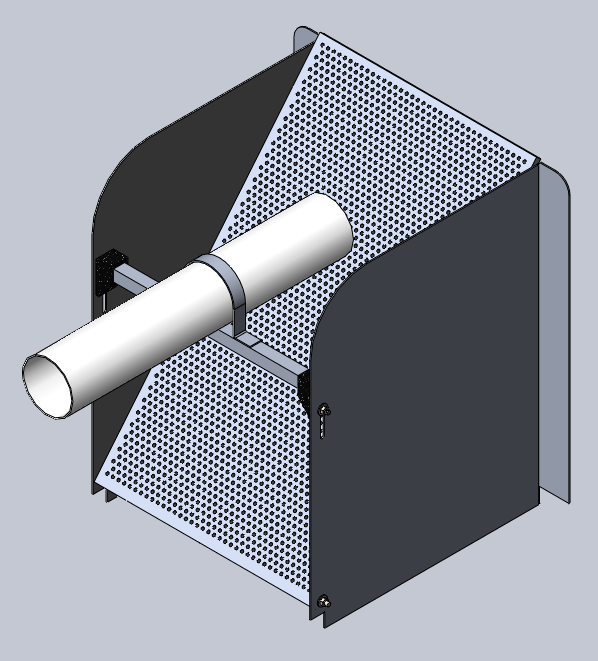
H2O Rx has a hybrid rainhead / tank filter. This moves the wet leaves and damp issues away from the house to the tank - where there is typically less concealed timber.

It can be manufactured to suit square or rectangular tank inlets (like ours). It is because we could not find one for rectangular tanks that we developed this.

Simply let us know the size and shape of your tank inlet and we will manufacture to suit.

Tank Filter

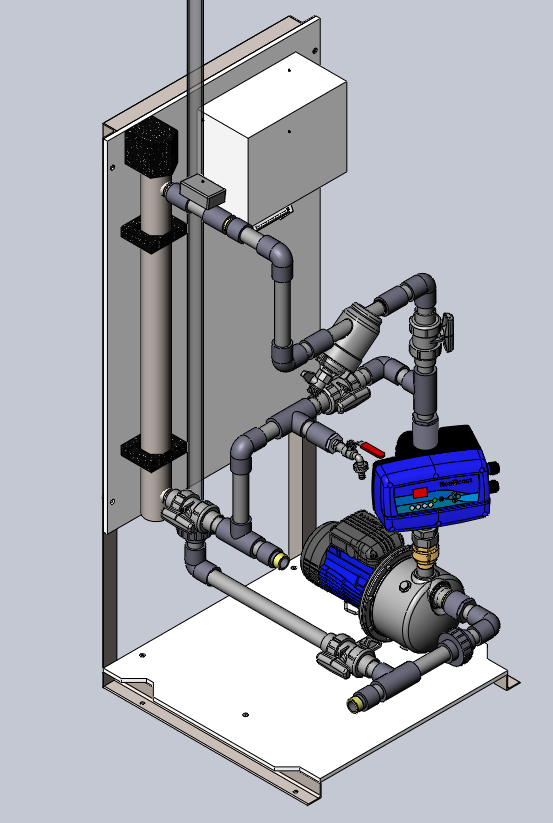
UV (ultraviolet light) does breakdown microbes and disinfect many common pathogens and is the basis of this skid. This small skid includes a pressure pump, UV lamp and a fine filter to protect strainers and small equipment. It also incorporates a simple level gauge for above ground tanks.

We recommend that this skid is located close to the tank outlet, and power provided (by a licenced electrican) to the skid. Water discharge from the skid can then be plumbed to the use.

We use this as the primary water treatment for our household water. We cannot guarantee that it is safe water, but we are pretty sure it's safer than untreated tank water, and we have not been sick from the water whilst using this system!

UV Skid

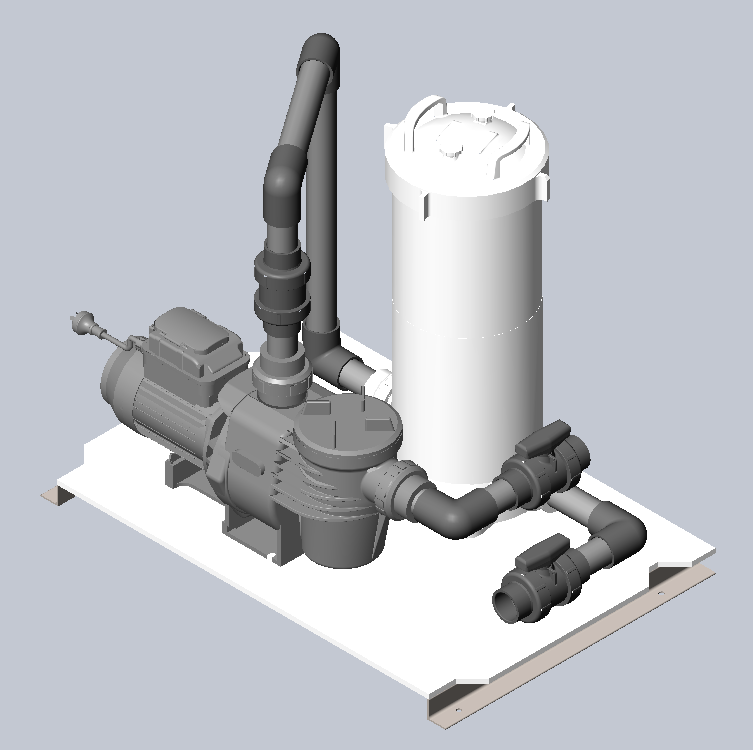
Despite prefiltration fine contaminents will get through, and they will tend to settle to the bottom of the tank. Agitation of the tank water will mobilise these contaminents and allow it to be filtered.

During rainfall events, agitation will occur and the solids load will increase. Running this filtration system will assist in clearing sediment from the tank bottom.

We recommend that this skid is located close to the tank outlet, and power provided (by a licenced electrican) to the skid. Water discharge from the skid is simply plumbed back to the tank creating a closed loop of filtration.

The filter we use is a cartridge type as it is only occasional use and provides fine filtration.

We knew there was sediment in our tank because of the state of the gutters and that shower heads and tap strainers were blocking. We used this system to clear sediment from our tank before we started using the water, and we continue to run it whenever there is a significant downpour.

Filtration Skid

When you get your tank water tested, and if it is found to have pathogens making it unsuitable for drinking, the treatment recommended is to pour a measured amount of Sodium Hypochlorite - often called "Pool Chlorine" into the tank. 12.5% Sodium Hypochlorite (available in the pool section of your favourite hardware store) is the same chemical that is used by many municipal water treatment facilities for primary disinfection of their water supplies.

During rainfall events this is when your roof gets washed clean and the sediment of the tank is agitated. This all increases the pathogen load.

12.5% Sodium Hypochlorite is a dangerous chemcial so it must be protected from people who don't understand the use, and the dosage must be controlled.

This system is an adder to our bulk filtration - it has a mechanism to measure the amount of oxidant chemical in the water, and add more if required to achieve a set level, reducing the peak pathogen loads that are caused by the rainfall.

We used this along with the bulk filtration system to clear out our tank before we started using it as drinking water. We had the water tested once we cleared our gutters and it was not suitable for drinking. After running the bulk filtration plus chlorination for a month, we had the water tested again and it was then suitable for drinking.

Chlorination

The "Bulk Filtration" and "Chlorination" parts of the treatment we have found are only needed during rain events once we have initially got the tank cleaned out. This is a simple module making use of a moisture sensor to start these systems when it rains and turn it off again once it sufficiently dries.

Running these as needed means that you save energy with your pumping, and reduce chemical use.

We have not implemented this because when it rains we are usually happy to get outside and celebrate it!

Chlorination

Bore Water

Bore water often is "hard" water in that it contains dissolved minerals that cause scale that clogs infrastructure and increases maintenance. It also makes the water unpalatable to humans and also stock - so stock drink less and put on weight slower.

To prevent these problems, "water softening" is required. The proven technologies are Ion Exchange and Reverse Osmosis. Both work, but Reverse Osmosis (RO) is newer and more fashionable. Ion Exchange has been around longer (since 1905) and is less "fashionable".

Ion Exchange has a significant advantage over RO in that there is no waste water stream. All the water that passes through the ion exchanger can be used. RO on the other hand has a waste water stream that contains the concentrated minerals, and on a rural property, that is quite hard to dispose of - and no one wants to waste water, so ion exchange is a better technology in the drier areas. On the other hand there is maintenance in that the Ion Exchange resin does need to be replaced or regenerated.

Due to the age of the Ion Exchange process, there are some rural properties that have these installed, but because they are not "fashionable" they are often not understood, neglected and not functioning.

H2O Rx can assist. If you provide us water test results from your bore, and any details of existing infrastructure, we can help you soften your bore water.

We don't have a water softener - our bore water is already quite soft (lucky us!).

Surface Water

Surface water is your dams, rivers and creeks and is the same as most inland towns, so the water treatment needs to be quite comprehensive - just as it is in a municipal water treatment plant.

Surface water requires pretreatment in the form of sedimantation and filtration to remove the solid particles, and then it can be disinfected using UV or chlorination.

H2O Rx can assist. If you provide us water test results from your surface water source, and any details of existing infrastructure, we can help you to pretreat your water.

We don't have this pretreatment system as we don't have any dams or creeks.